
Science of Reading Intervention Materials for Tweens & Teens
For over 40 years, Saddleback has built reading materials for students who read below grade level, but the Science of Reading movement has sharpened exactly what that instruction needs to look like. This page walks through how our decodable and phonics-based libraries align with SoR research, and why age-appropriate delivery matters as much as the phonics itself.
Why Older Students Need Decodables
Most decodable readers are built for six-year-olds: short, simple, and about topics that don't interest a twelve- or sixteen-year-old. That mismatch is a real barrier to Tier 2 and Tier 3 intervention at the secondary level, where a student may decode at a first- or second-grade level but think and socialize like a teenager. Saddleback's decodable libraries, Tween Emergent Reader Libraries® Phonics (TwERL) for grades 4–8 and Teen Emergent Reader Libraries® Phonics (TERL) for grades 9–12, are written to close that gap: controlled phonics progressions (CVC words through multisyllabic words, consonant digraphs, and vowel diphthongs) wrapped in content built for an older reader, not a young child.
This follows from how reading actually works, not just a design preference. Under the Simple View of Reading (Gough & Tunmer, 1986), reading comprehension is the product of decoding and language comprehension: if either is near zero, comprehension is near zero, regardless of age. A sixteen-year-old with strong verbal reasoning but second-grade decoding still needs explicit decoding instruction to read on grade level.
Bridging the Gap: Phonics for Adolescents
Systematic phonics instruction doesn't stop mattering after third grade. Adolescent striving readers, English Language Learners, Newcomers, and students with IEPs often need the same explicit decoding instruction as younger readers, just delivered differently: faster-paced, with more mature subject matter, and built for classroom or small-group intervention rather than a picture-book format. Saddleback's phonics-based solutions are structured around orthographic mapping, the process reading researcher David Kilpatrick identifies as how skilled readers store words for instant, automatic recognition, and systematic phonics practice, so students build automatic word recognition instead of relying on guessing strategies.
This isn't a fringe position. Timothy Shanahan, who chaired the original National Reading Panel, took up this exact question in a 2025 Journal of Adolescent & Adult Literacy article on whether phonics belongs in middle and high school. Two decades earlier, Reading Next (Biancarosa & Snow, 2004, Carnegie Corporation of New York), the founding report on secondary literacy, made the same case: instruction can't stop at fifth grade.
How Our Hi-Lo Books Align with SoR
Hi-Lo isn't a substitute for Science of Reading; it's a delivery format for it. Our books pair the decoding practice SoR calls for with the high-interest, low-readability content that keeps an older striving reader engaged long enough to build fluency and comprehension. That combination, explicit phonics plus age-respectful content, is what lets a Tier 2 or Tier 3 intervention actually get used, rather than sitting on a shelf because students refuse to read it.
Reading researcher Hollis Scarborough's Reading Rope (2001), one of the most widely used models in Science of Reading training, describes skilled reading as word-recognition strands (phonics, decoding) braiding with language-comprehension strands (vocabulary, background knowledge, verbal reasoning). Hi-Lo content and explicit phonics are two strands of that same rope, not competing approaches: decodable practice builds word recognition, and high-interest content builds the vocabulary and background knowledge the comprehension strands need. This reflects the five components of reading instruction identified by the National Reading Panel (National Institute of Child Health and Human Development, 2000): phonemic awareness, phonics, fluency, vocabulary, and comprehension.
Tween Emergent Reader Libraries® Phonics (Grades 4-8)
Three leveled sets (Decode, Develop, Discover) that carry students from CVC words through multisyllabic words, using full-color, tween-centric stories instead of babyish content. Includes teacher's guides with lesson plans and reproducible phonics activities.
![TwERL Phonics: GO! Decode [1]](https://cdn11.bigcommerce.com/s-5uqrjcd/images/stencil/original/image-manager/twerl-phonics-go-decode.png?t=1788985268)
![TwERL Phonics: GO! Develop [2]](https://cdn11.bigcommerce.com/s-5uqrjcd/images/stencil/original/image-manager/twerl-phonics-go-develop.png?t=1788985309)
![TwERL Phonics: GO! Discover [3]](https://cdn11.bigcommerce.com/s-5uqrjcd/images/stencil/original/image-manager/twerl-phonics-go-discover.png?t=1788985353)
Teen Emergent Reader Libraries® Phonics (Grades 9-12)
The same systematic phonics progression as Tween Emergent Reader Libraries, built for teens with teen-centric storylines.
![TERL Phonics: Decode [1]](https://cdn11.bigcommerce.com/s-5uqrjcd/images/stencil/original/image-manager/terl-phonics-decode.png?t=1788985445)
![TERL Phonics: Develop [2]](https://cdn11.bigcommerce.com/s-5uqrjcd/images/stencil/original/image-manager/terl-phonics-develop.png?t=1788985477)
![TERL Phonics: Discover [3]](https://cdn11.bigcommerce.com/s-5uqrjcd/images/stencil/original/image-manager/terl-phonics-discover.png?t=1788985529)
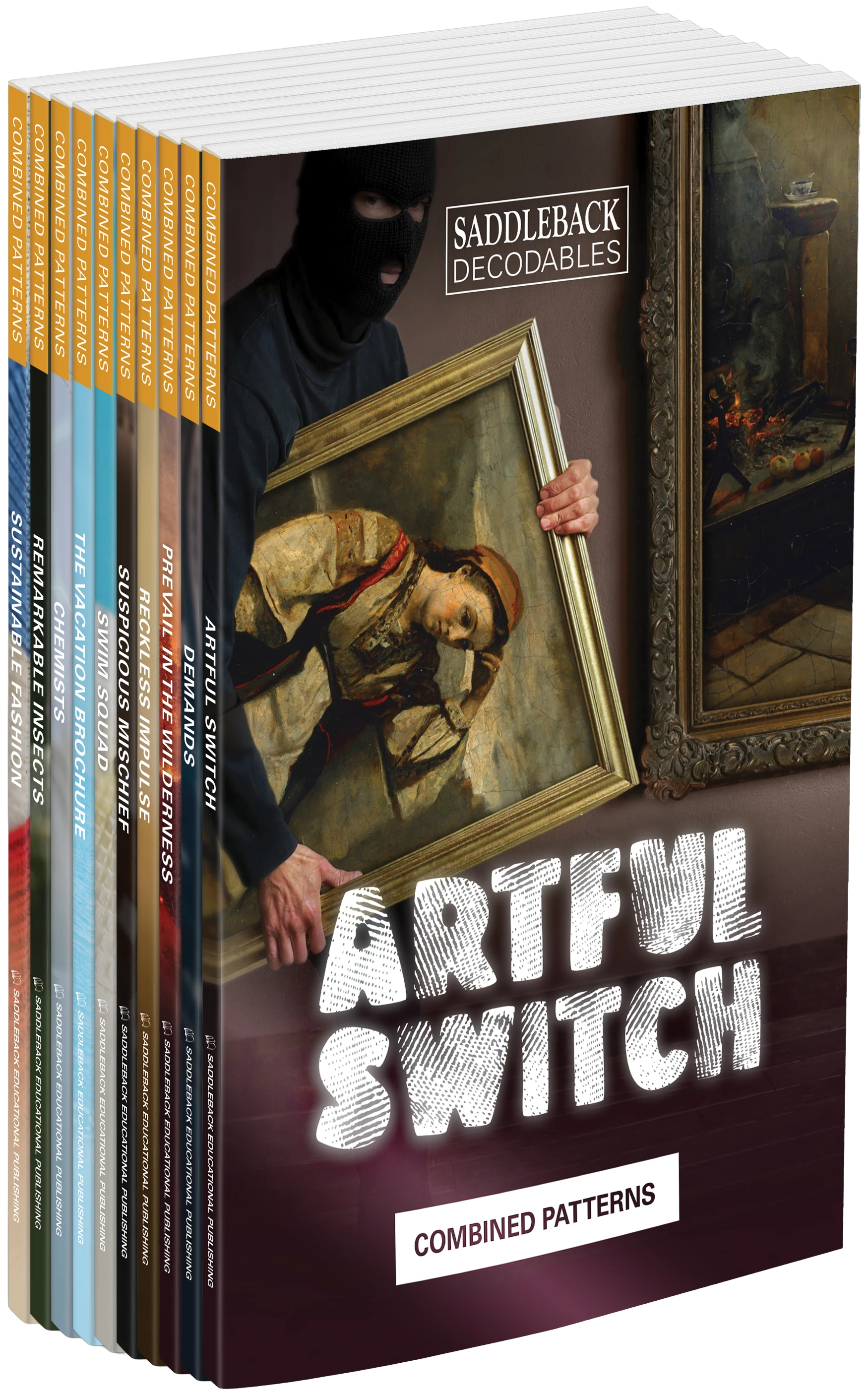
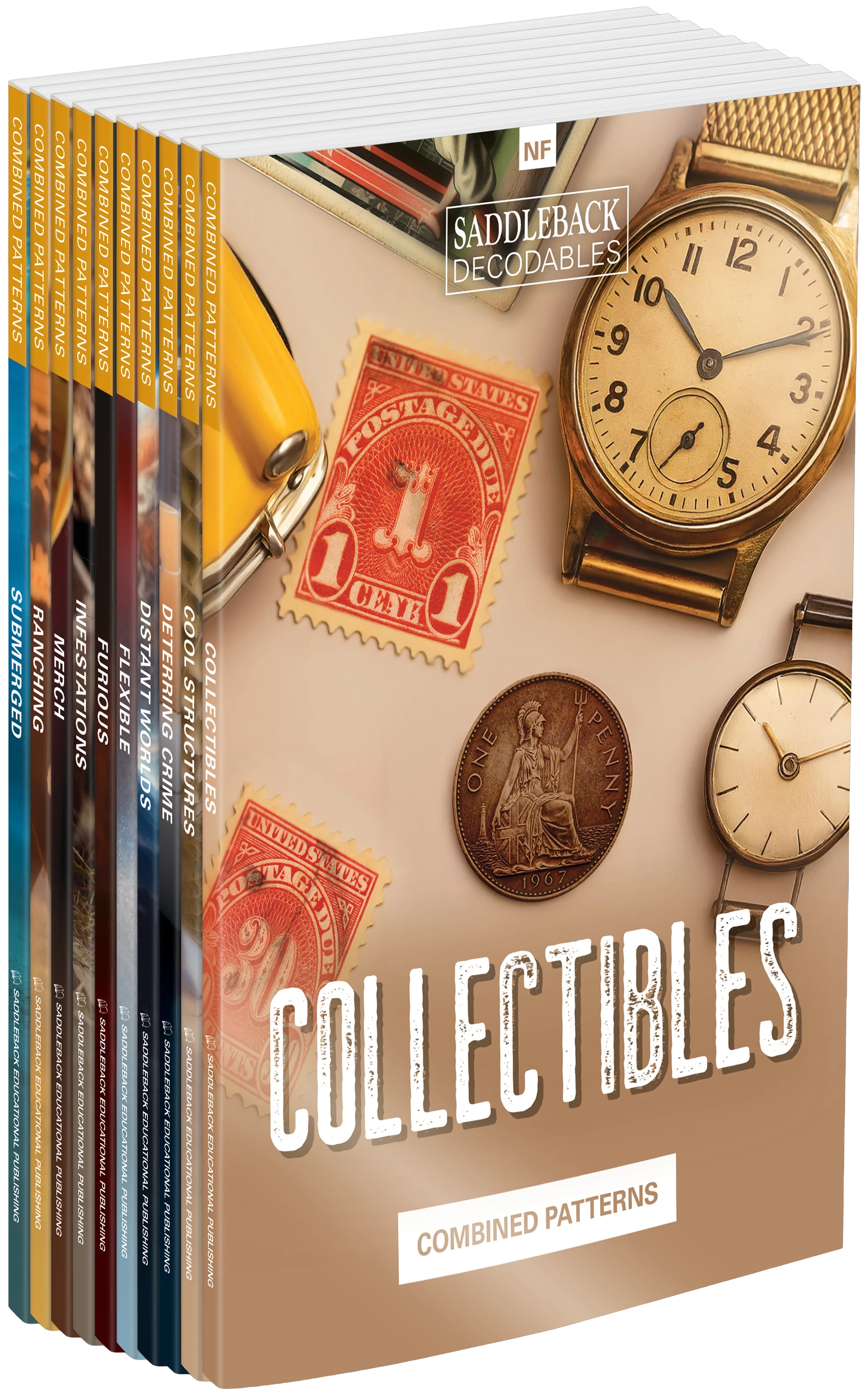
Phonics Decodable Readers™ (Grades 6-12)
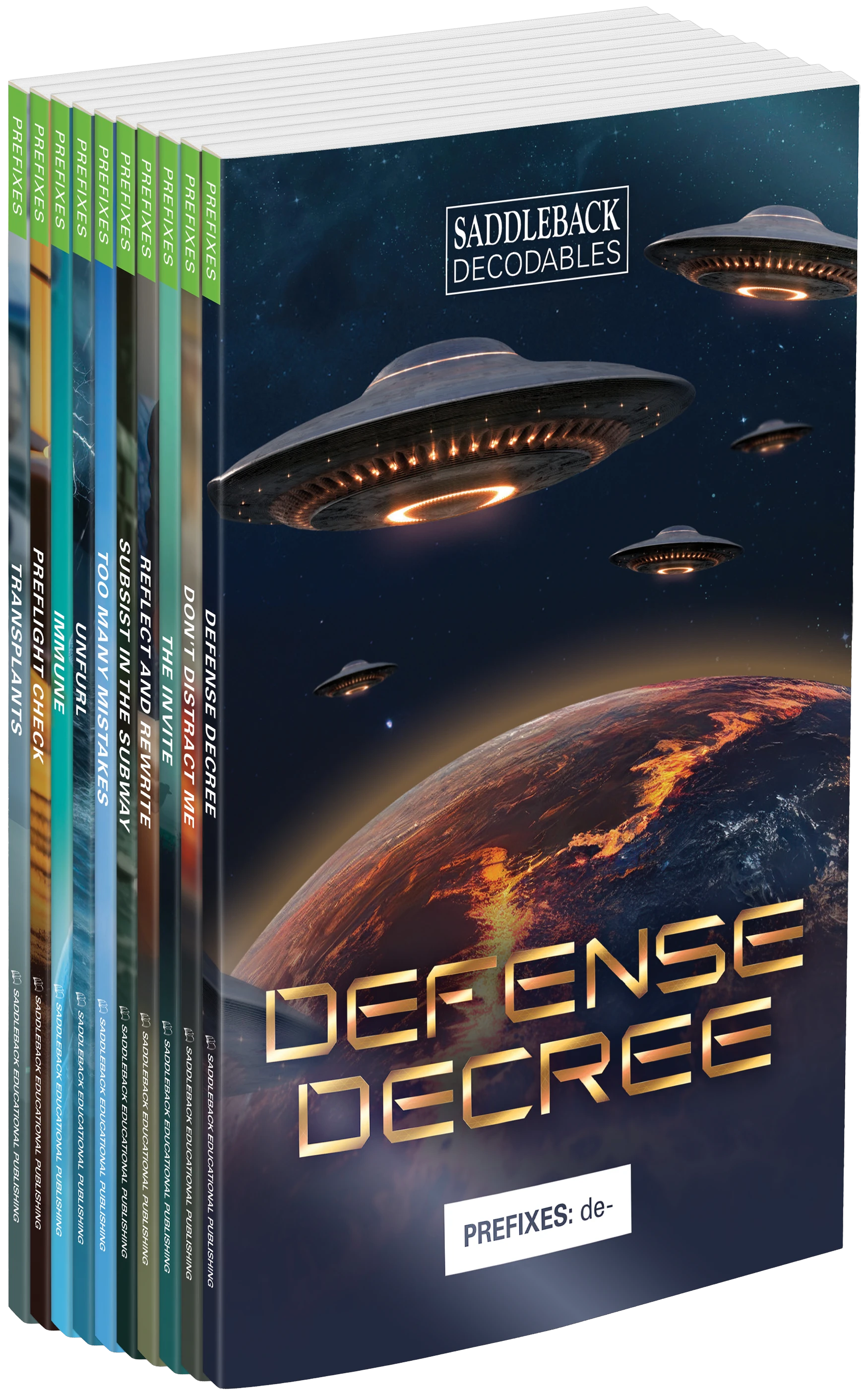
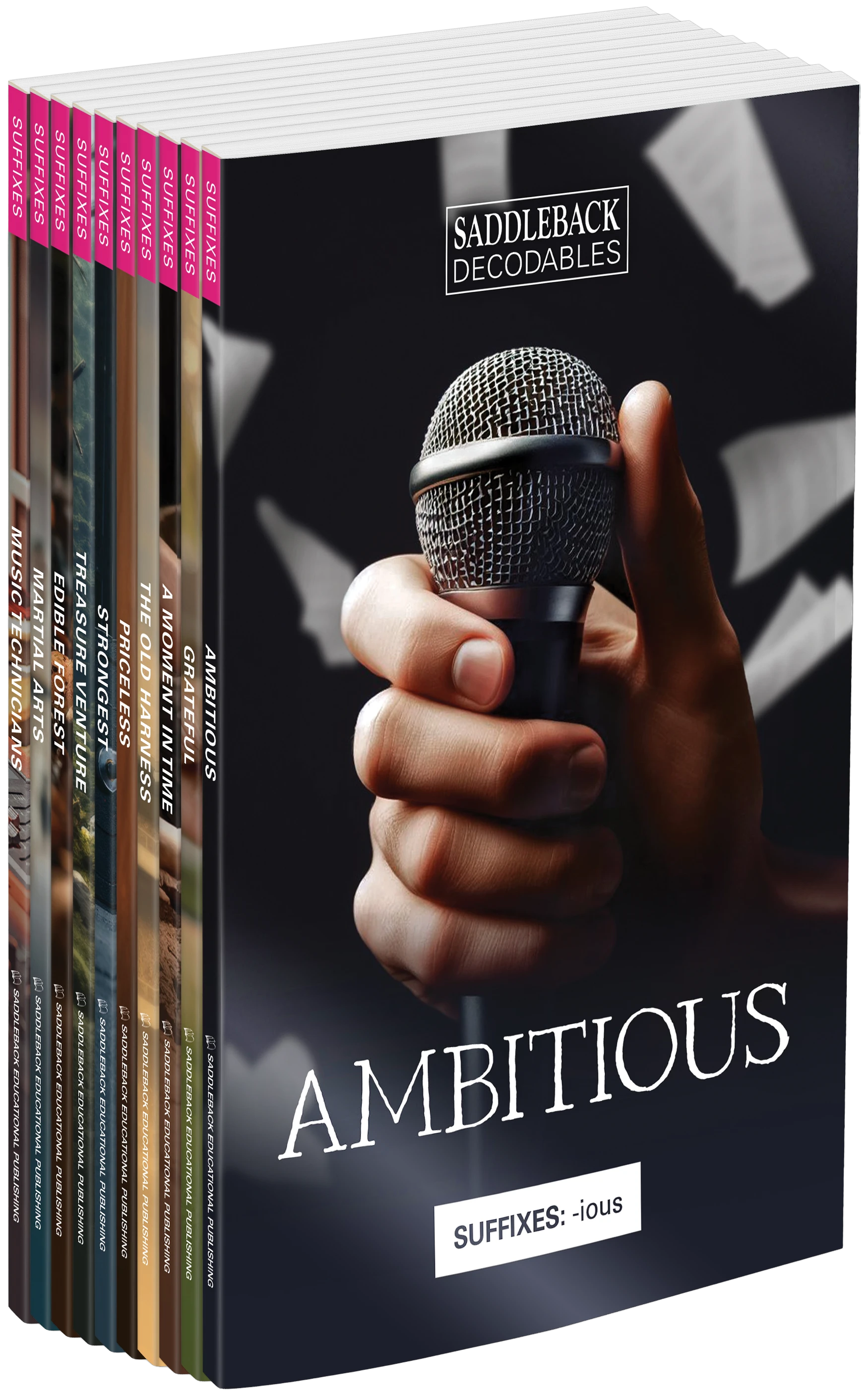
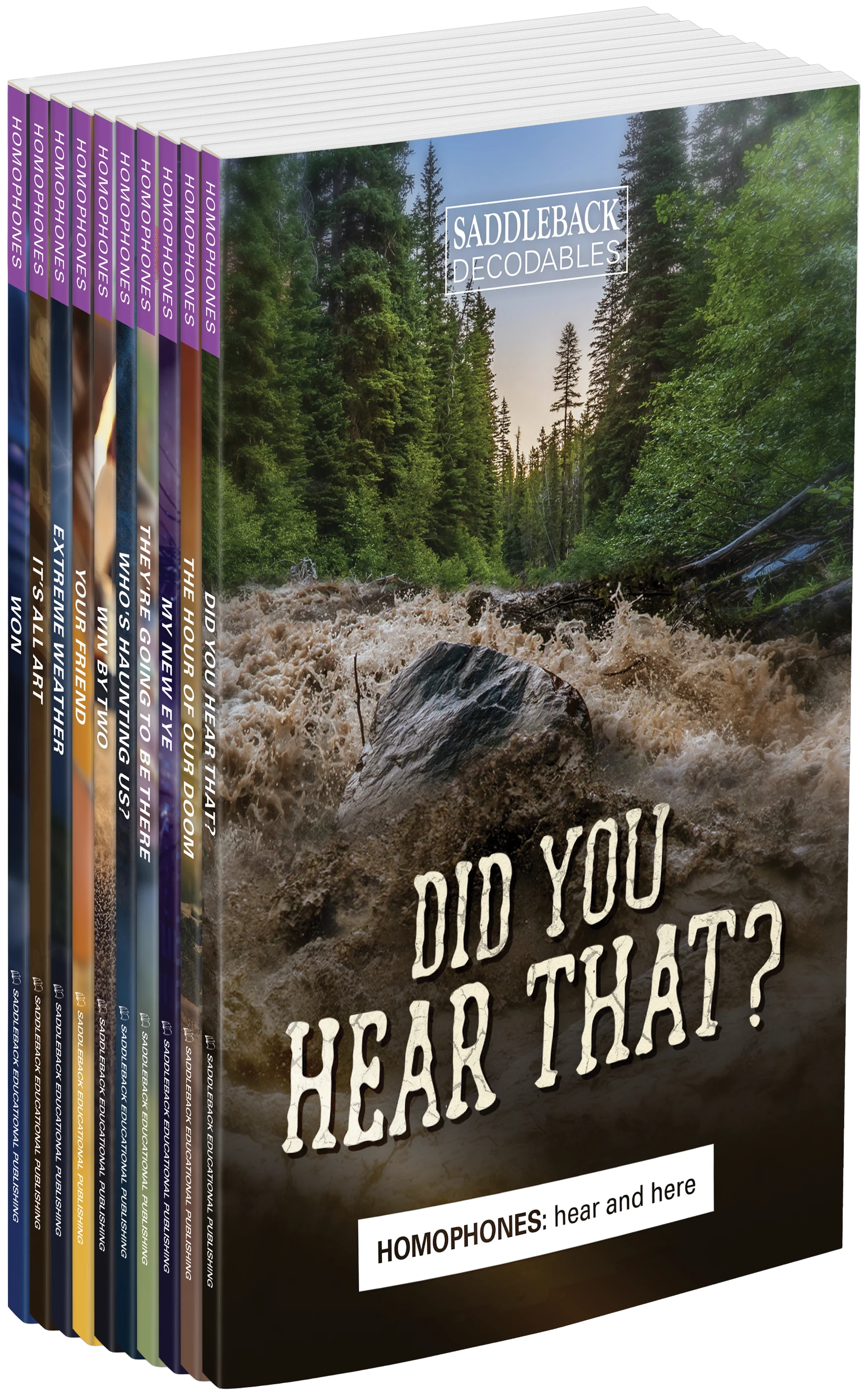
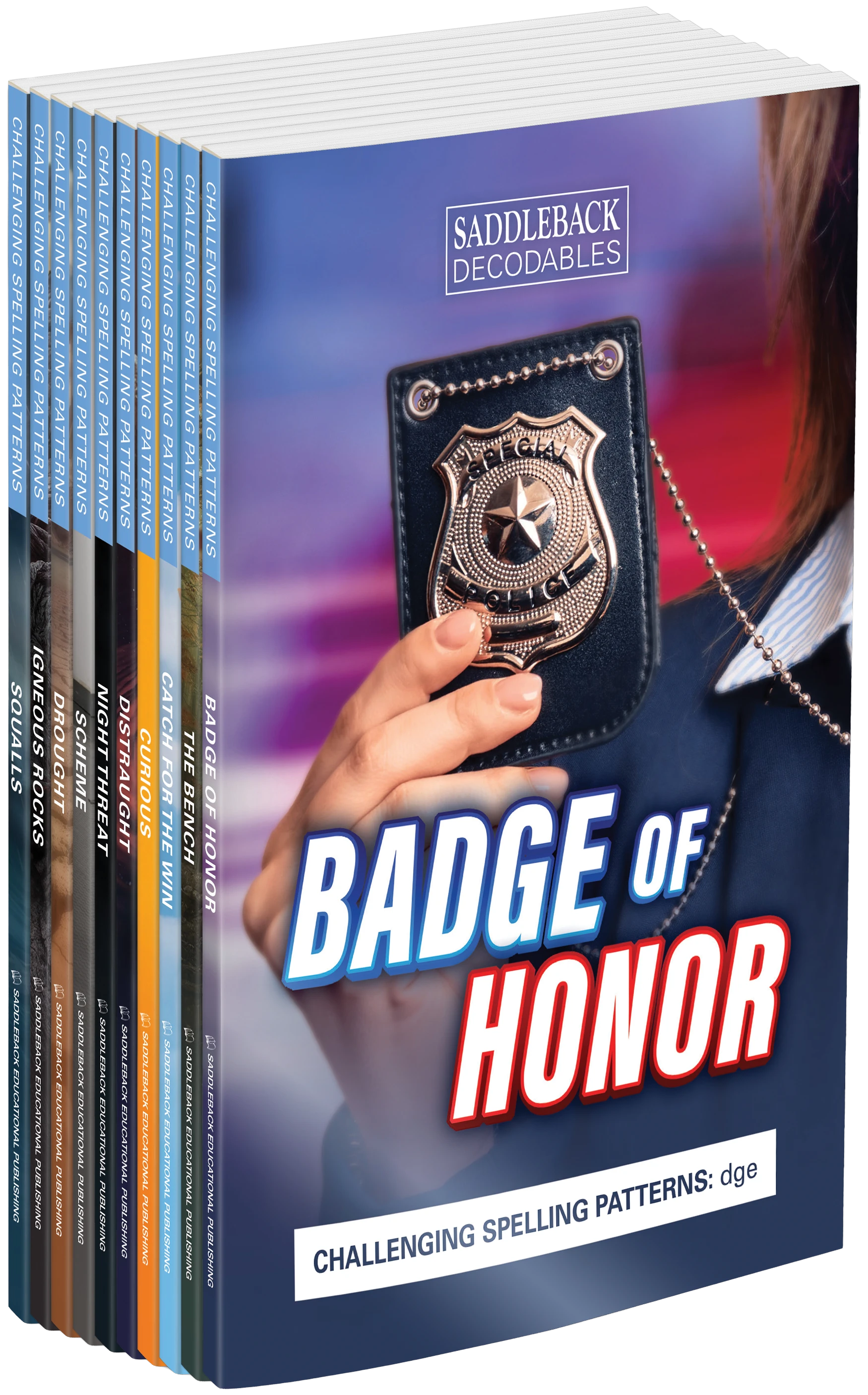
Six 10-book sets, each targeting a specific skill, prefixes, suffixes, homophones, challenging spelling patterns, or combined patterns, so teachers can pinpoint exactly the phonics gap a student needs to close. Every title includes a glossary, and the nonfiction books add built-in technical vocabulary support.
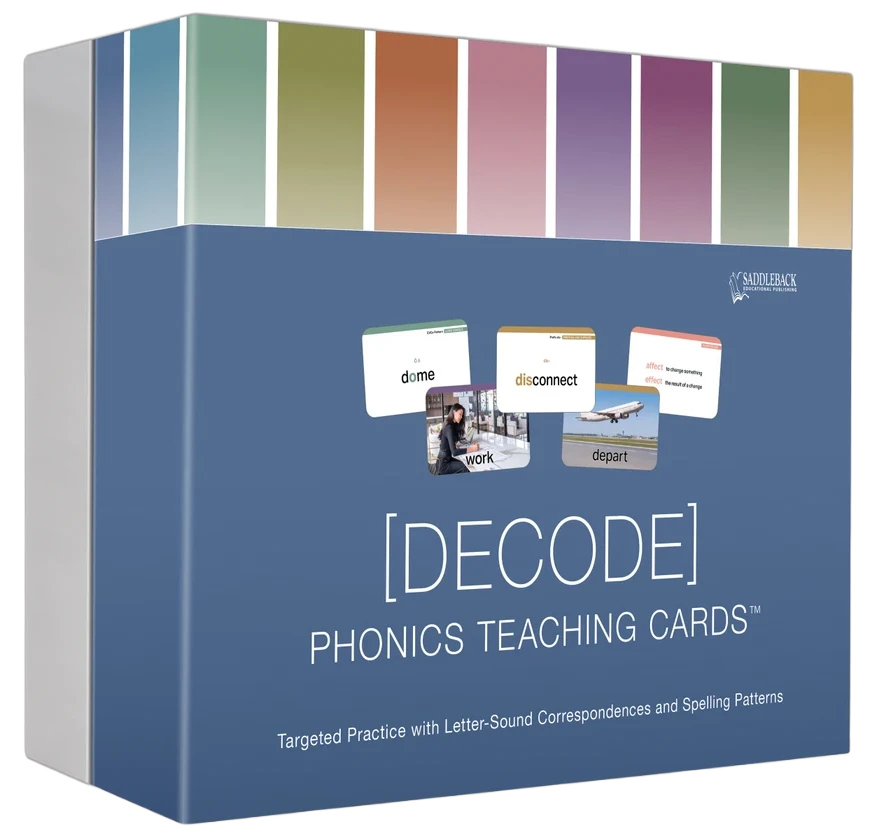
Decode Phonics Teaching Cards™
A standalone, flashcard-based way to teach and drill letter-sound patterns and decoding skills, no reader sets required, built for whole-class instruction or small-group intervention.
DECODABLE PHONICS BOOKS FOR (GRADES 4-12)
A one-stop shop spanning both Tween and Teen Emergent Reader Libraries Phonics, for schools that want to outfit multiple grade bands with a consistent, controlled phonics progression in one order.
RELATED READING
What the Science of Reading Means for Middle and High School
Phonics for Older Students: How Decodable Books Work for Tweens and Teens
Designing Tier 2 and Tier 3 Reading Intervention at the Secondary Level
A Buyer's Framework for Secondary Reading Intervention Curricula
Rebuilding Reading Identity in Striving Adolescents
Further Reading
- Biancarosa, G., & Snow, C. E. (2004). Reading Next: A Vision for Action and Research in Middle and High School Literacy. Carnegie Corporation of New York.
- National Reading Panel. (2000). Report of the National Reading Panel: Teaching Children to Read. National Institute of Child Health and Human Development.
- Scarborough, H. S. (2001). Connecting early language and literacy to later reading (dis)abilities: Evidence, theory, and practice. In Handbook of Early Literacy Research.
- Shanahan, T. (2025). What role, if any, should phonics play in a middle school or high school? The answer may surprise you. Journal of Adolescent & Adult Literacy.
Read our Phonics FAQ's here.